Template Marketplace
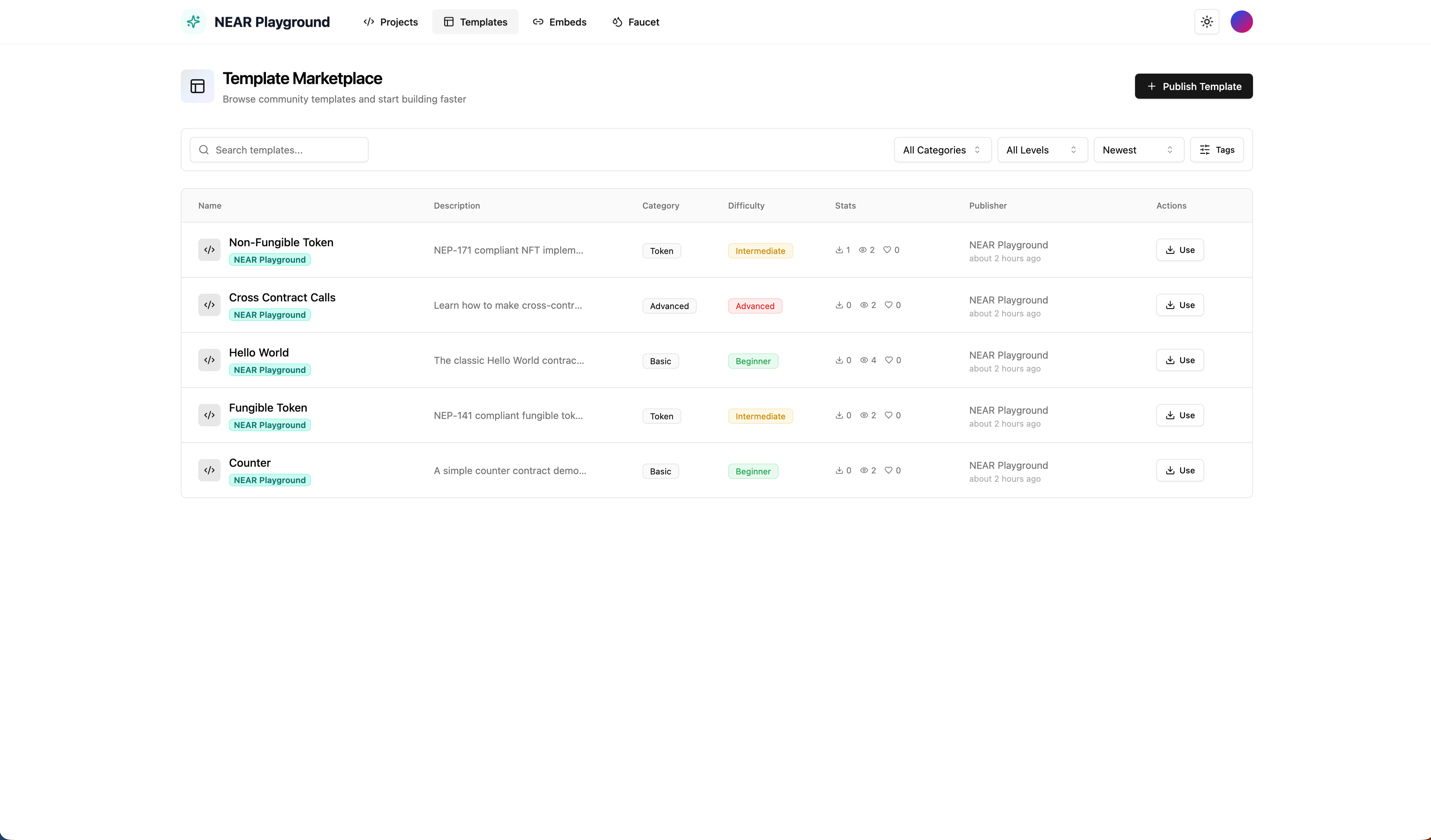
The Template Marketplace displays all available templates in a searchable table. Each template shows:| Column | Description |
|---|---|
| Name | Template name and publisher |
| Description | Brief explanation of what the contract does |
| Category | Type of contract (Basic, Token, Advanced, etc.) |
| Difficulty | Skill level (Beginner, Intermediate, Advanced) |
| Stats | Downloads, views, and likes |
| Publisher | Who created the template |
| Actions | Use button to create a new project from the template |
Publishing a Template
Click the Publish Template button in the top right of the Templates page. You can publish from two sources:From My Project
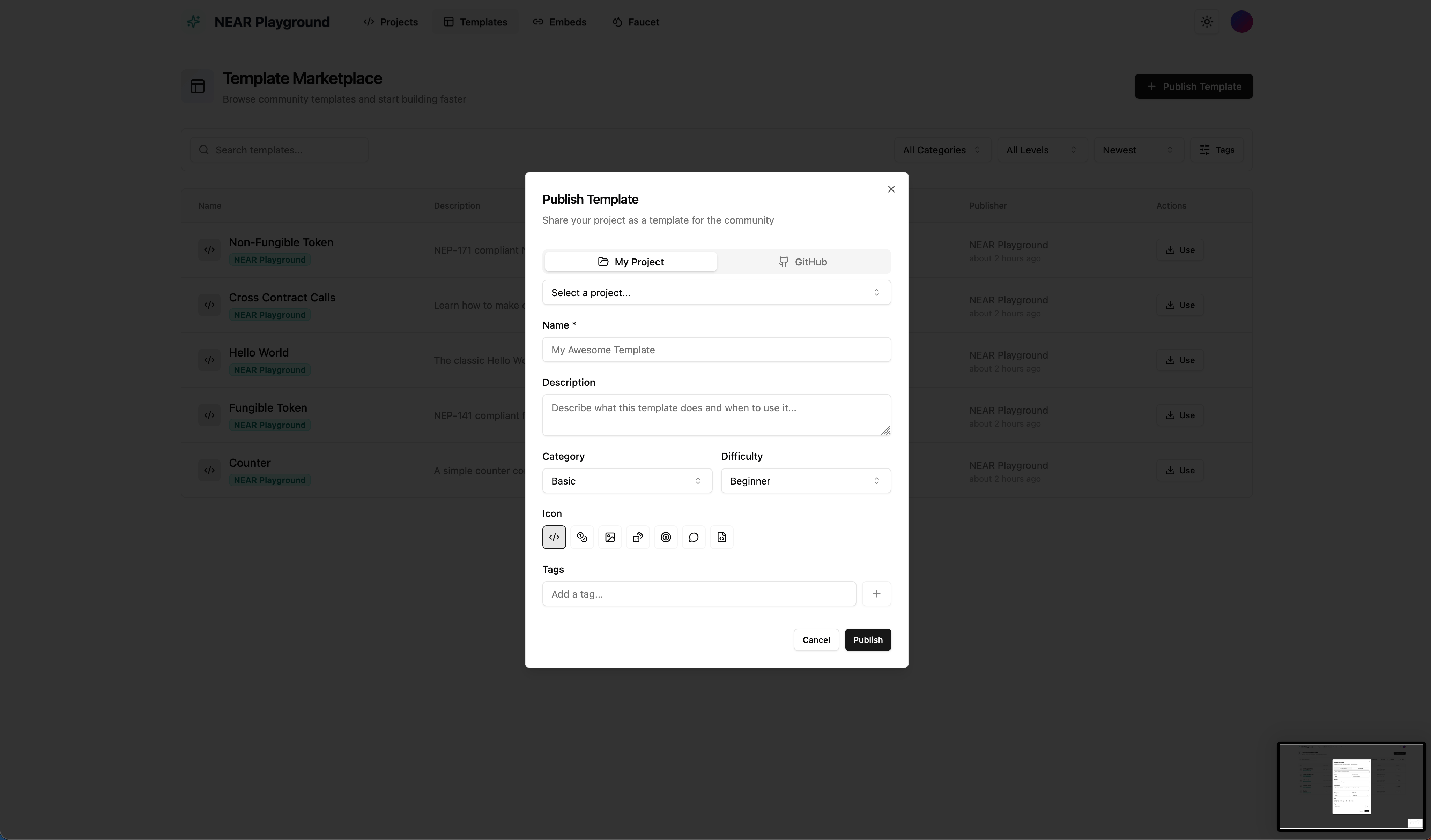
Publish an existing project from your workspace:- Go to the Templates page
- Click Publish Template
- Select the My Project tab
- Choose your project from the dropdown
- Fill in the template details
- Click Publish
From GitHub
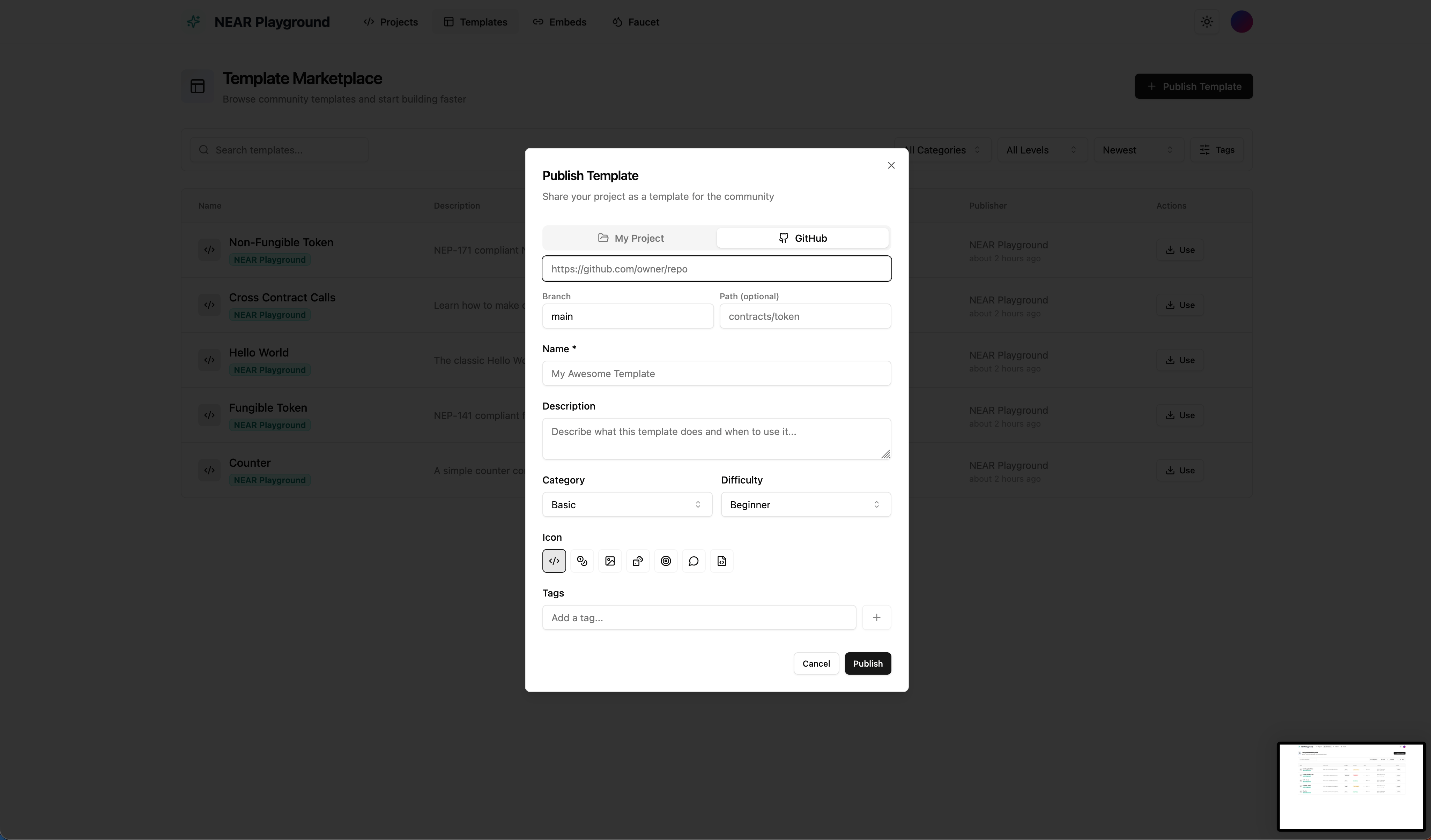
Import and publish directly from a GitHub repository:- Go to the Templates page
- Click Publish Template
- Select the GitHub tab
- Enter the repository URL (e.g.,
https://github.com/owner/repo) - Specify the branch (default:
main) - Optionally set a path if the contract is in a subdirectory (e.g.,
contracts/token) - Fill in the template details
- Click Publish
Template Fields
| Field | Description |
|---|---|
| Name | Display name for your template |
| Description | Explain what the contract does and when to use it |
| Category | Select a category (Basic, Token, Advanced, etc.) |
| Difficulty | Skill level required (Beginner, Intermediate, Advanced) |
| Icon | Choose an icon to represent your template |
| Tags | Add searchable tags to help users find your template |
Guidelines
For a good template:- Include helpful comments explaining key parts of your code
- Use clear, descriptive variable and function names
- Ensure the code compiles successfully
- Document any required setup or configuration
- Add meaningful tags for discoverability